This project originated from my childhood, growing up closeted in the Appalachian mountains of North Carolina, where my father taught me to fly fish. I was captivated less by fishing than by the flies themselves and the men who tie them—meticulously transforming feathers, marabou, chenille, metallic thread, teased hair and glitter into tiny, gorgeous objects.
I’m interested in the invisible rules that determine what we allow ourselves to express, what we learn to disguise, and what parts of ourselves we quiet in order to belong.
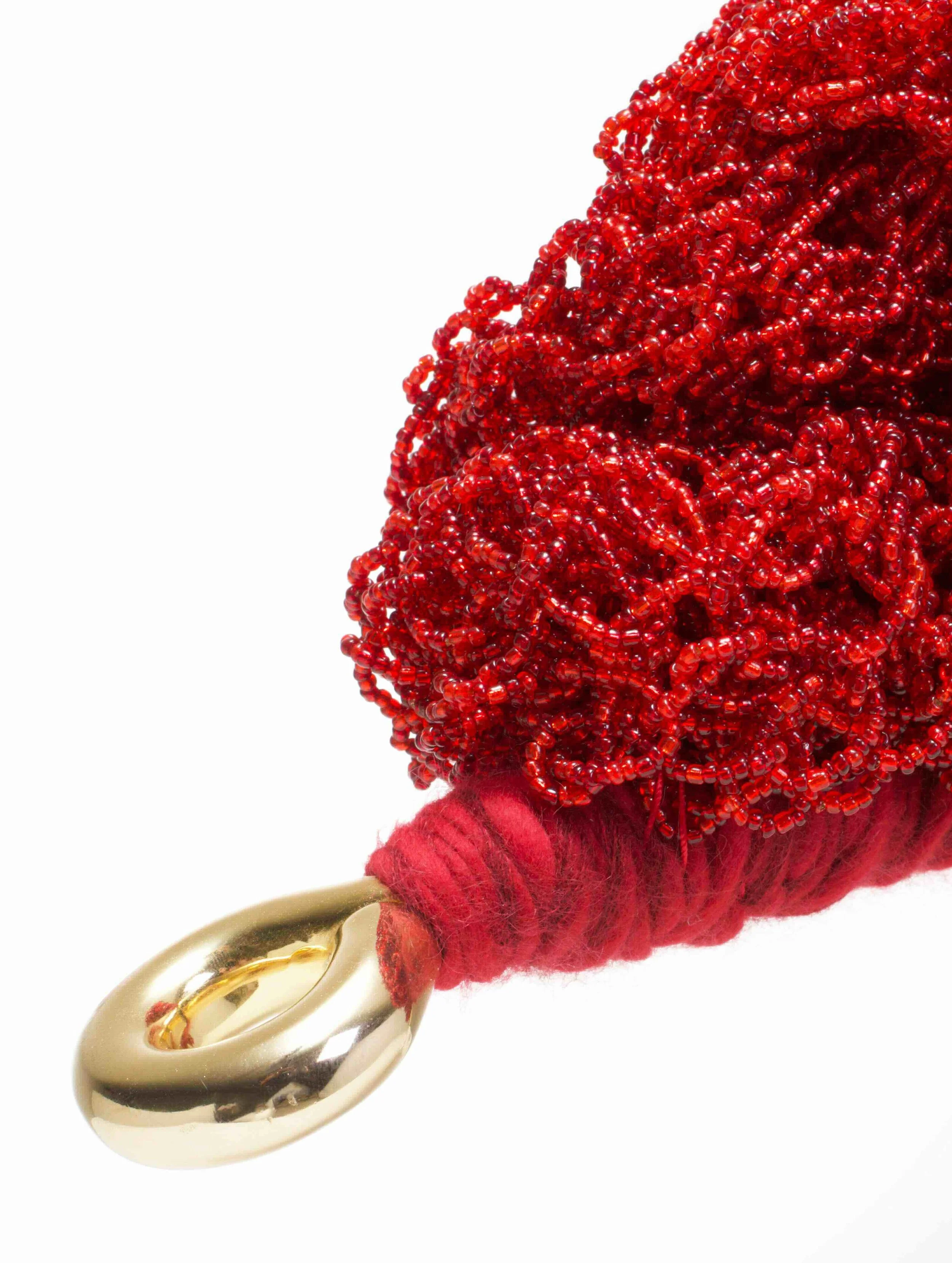
Dolls for Mountain Men
I reconstruct historical fly patterns at human scale through crochet, weaving, knitting, beadwork and other forms of handwork, mounting them on polished metal hooks. Enlarged beyond usefulness, they become equally soft and enticing, sharp and dangerous.
Increasingly, the fly is becoming a point of departure rather than a destination, opening the work toward clothing, hair, adornment and the body. I’m interested in how we use dress and identity to express and reveal ourselves as much as to camouflage and fit in.
The fishing fly remains my way into the work, but the larger question is how thoroughly we absorb the rules surrounding us until they begin to feel like our own preferences.
Years later, I realized I had been looking at a system of permission. Fly tying gives men a sanctioned context for engaging in intricate handwork, ornament, softness and flamboyant color, if only on the smallest of scales. Identical materials and gestures that could signify something entirely different in drag or fashion become unremarkably masculine when used to create a fishing lure. Nothing about the materials or the act of making changes; only the context and the permission surrounding them do.